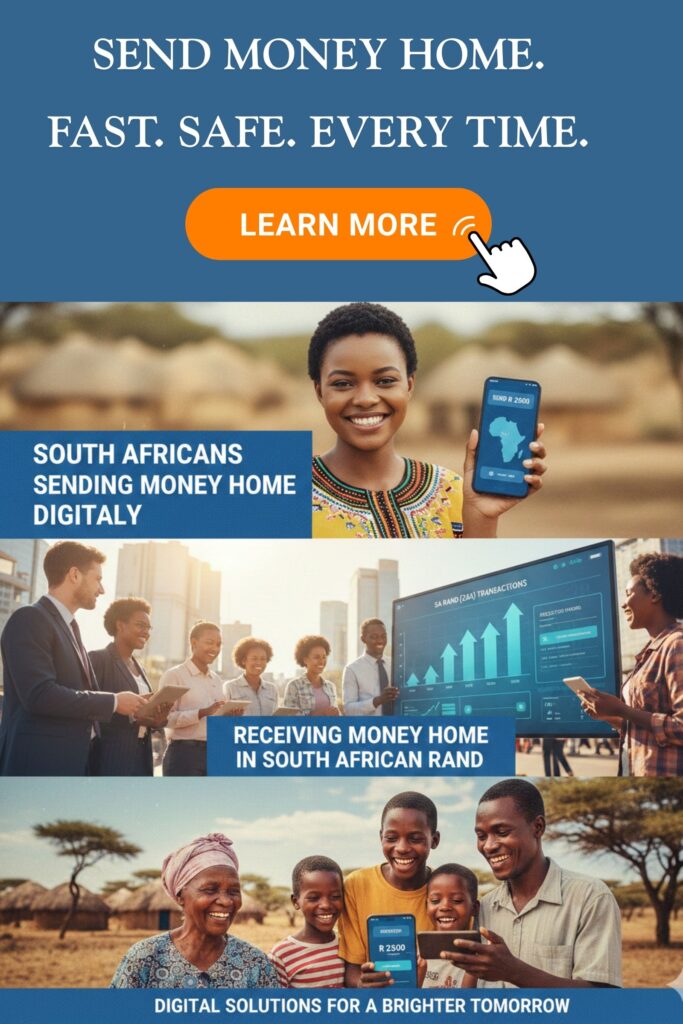

Every month, hundreds of thousands of migrant workers across South Africa face the same challenge. They have earned their wages. Their families are waiting. And they need to get that money home — safely, in full, and without paying more than necessary to do it.
For many workers, this is not straightforward. Some do not have bank accounts. Others work in areas far from formal financial services. Some have been caught out by unreliable services, hidden fees, or worse — lost money that never arrived.
This guide explains your options, what to look out for, and how to make sure your hard-earned money reaches the people who depend on it.
Why Remittance Matters
Remittances — money sent by workers to their families in another location — are a lifeline for millions of households across southern Africa. In Zimbabwe, Mozambique, Lesotho, and Malawi, money sent home by workers in South Africa supports food, school fees, medical costs, and housing.
The amounts involved are not small in aggregate. South Africa is one of the largest remittance-sending countries on the African continent. The money flowing from South African mines, farms, construction sites, and domestic workplaces to neighbouring countries represents a significant part of those countries’ household incomes.
Getting remittance right — making it safe, reliable, and affordable — matters enormously. When transfers fail, go missing, or arrive late, real families go without.
The Main Ways to Send Money Home
Bank Transfers
If you have a South African bank account, you can use your bank to send money internationally. Most major banks offer cross-border transfer services.
The advantages are security and a clear paper trail. The disadvantages are cost and access. Bank transfers typically carry higher fees than specialist remittance services. Exchange rates offered by banks are often less favourable. And if the person receiving the money does not have a bank account in their home country — which is common in rural areas — a bank transfer may not reach them at all.
Bank transfers also take time. International transfers can take two to five business days, which is a problem if your family needs the money urgently at month-end.
Money Transfer Operators
Dedicated money transfer operators — companies whose core business is moving money across borders — are widely used by migrant workers across South Africa.
These services are generally faster than bank transfers and often available in convenient locations such as retail stores, petrol stations, and shopping centres. Many of them allow cash collection at the receiving end, which is important for recipients who do not have bank accounts.
The key things to check with any money transfer operator are the total cost of the transfer (including fees and the exchange rate margin), how long the transfer takes, where the recipient can collect, and whether the service is registered with the South African Reserve Bank (SARB).
Mobile Money
Mobile money platforms allow workers to send money using a basic mobile phone — no smartphone required, and in many cases no bank account needed. The recipient collects cash through a network of agents in their area.
Mobile money has grown significantly across southern Africa. Services like EcoCash in Zimbabwe and M-Pesa in various markets have made it possible for people in remote areas to receive money that would previously have required a long journey to a bank or collection point.
For migrant workers who are comfortable with mobile technology, mobile money can be one of the fastest and most convenient options available.
Informal Channels
Many workers still rely on informal transfer methods — sending cash with a trusted colleague travelling home, or using informal value transfer networks. These methods are common because they feel familiar and personal.
They are also risky. Cash can be lost, stolen, or never delivered. There is no paper trail. There is no recourse if something goes wrong. And depending on the amounts involved, some informal transfer arrangements may fall outside the law.
If you are currently using informal channels, it is worth understanding what regulated alternatives are available to you. The difference in cost is often smaller than people expect — and the difference in security is significant.
What to Look For in a Remittance Service
Not all remittance services are equal. Before you commit to one, ask the following questions.
Is the service registered? Any company offering money transfer services in South Africa must be registered with the South African Reserve Bank. Always check that the service you are using is authorised. A registered service has oversight, accountability, and legal obligations to protect your money.
What is the total cost? The headline fee is not always the full story. Many services charge a transfer fee and also make money on the exchange rate — giving you a rate that is worse than the mid-market rate and keeping the difference. Always ask what the recipient will receive in their local currency, not just what you are sending in rands. That is the number that matters.
How long does it take? Month-end is when most workers need to send money — and when most services are at their busiest. If your family’s rent or school fees are due, a service that takes three days is not the same as one that processes on the same day. Know your timeline before you commit.
Where can the recipient collect? A transfer that arrives digitally is useless if your family cannot access it. Make sure the service has collection points — agents, banks, or mobile money outlets — that are accessible to the person receiving the money. In rural areas, this is a critical consideration.
What happens if something goes wrong? A reputable service will have a clear process for resolving failed or delayed transfers. It will have customer support that you can reach. And it will have a way to track your transfer so that you know when it has been received. If a service cannot answer these questions clearly, that is a warning sign.
Sending Money to Specific Countries
Zimbabwe
Zimbabwe is the most common destination for remittances from South Africa. The ZAR/USD/RTGS exchange rate environment in Zimbabwe can be complex, and the gap between official and informal rates has historically been significant.
When sending to Zimbabwe, pay close attention to the exchange rate being applied and confirm what the recipient will actually receive. Mobile money — particularly EcoCash — is widely used for collections in Zimbabwe, including in areas with limited banking infrastructure.
Mozambique
Mozambique has a well-established mobile money sector, with M-Pesa and other services operating across the country. Cash collection through agent networks is also available in most urban and peri-urban areas.
Transfer times to Mozambique can vary depending on the service used. Month-end volumes tend to slow processing across all channels, so sending a day or two before the deadline is good practice.
Lesotho
Lesotho is closely integrated with the South African financial system through the Common Monetary Area, which means that the South African rand is accepted alongside the Lesotho loti at a 1:1 rate. This simplifies transfers in some respects, though formal transfer services are still the safest route.
Collecting cash at agent locations is the most common approach for recipients in Lesotho, particularly in rural and mountainous areas where banking access is limited.
Malawi
Malawi has a growing mobile money sector but a less developed formal banking network outside major urban centres. Agent-based cash collection is the most reliable option for recipients in rural Malawi.
Transfer fees and exchange rates for ZAR to MWK can vary significantly between services. Compare before you commit, particularly if you are sending regularly.

Tips for Sending Money Safely Every Month
Set a regular schedule. Sending at the same time each month — a few days before month-end — gives your family certainty and reduces the stress of last-minute transfers when services are busy.
Keep your receipts. Every transfer should generate a receipt or reference number. Keep these. If a transfer is delayed or lost, you will need this information to trace it.
Confirm receipt. Once you have sent money, check with your family that it has arrived before assuming the transfer is complete. A quick message or call saves significant stress if there is a problem.
Avoid sending cash with individuals. No matter how well you know the person, sending cash informally carries real risk. Use a registered service.
Compare services regularly. Fees and exchange rates change. A service that was the best option six months ago may not be the best one today. It is worth comparing your options every few months, especially if you are sending significant amounts.
Use services that offer tracking. Real-time transfer tracking gives you confidence that your money is moving. If a service cannot show you where your transfer is, consider using one that can.
Zonge Business Solutions: Built for Workers Like You
Zonge Business Solutions is a trading division of Zonge Technologies CC and an affiliate of ZongeTech. It was built specifically to serve migrant and mobile workers across South Africa who need to send money home reliably every month.
We facilitate cash remittances to Zimbabwe, Mozambique, Lesotho, Malawi, and domestic destinations within South Africa. We use electronic funds transfer, mobile money platforms, and a reliable logistics network to make sure your money gets where it needs to go — securely and on time.
We specialise in month-end transfers, when the need is greatest and the pressure is highest. Our services are designed for workers who may not have bank accounts, who need fast processing, and who need to know that their families will receive their money without unnecessary deductions or delays.
Zonge Business Solutions is part of Zonge Investments (PTY) Limited — a 100% Black-owned, B-BBEE Level 1 South African company. When you use our service, you are working with a South African business that understands your situation and is accountable to the communities it serves.
Final Thought
Sending money home should not be complicated, expensive, or risky. With the right service — one that is registered, transparent about costs, and built for the realities of working life in South Africa — it does not have to be.
Your family depends on that money. Make sure it gets there.